7 Mistakes Small Businesses Make with Ransomware Protection
Educational article retained from the original reference website. It describes general security practices, not services or experience claimed by 3A IT Solutions.
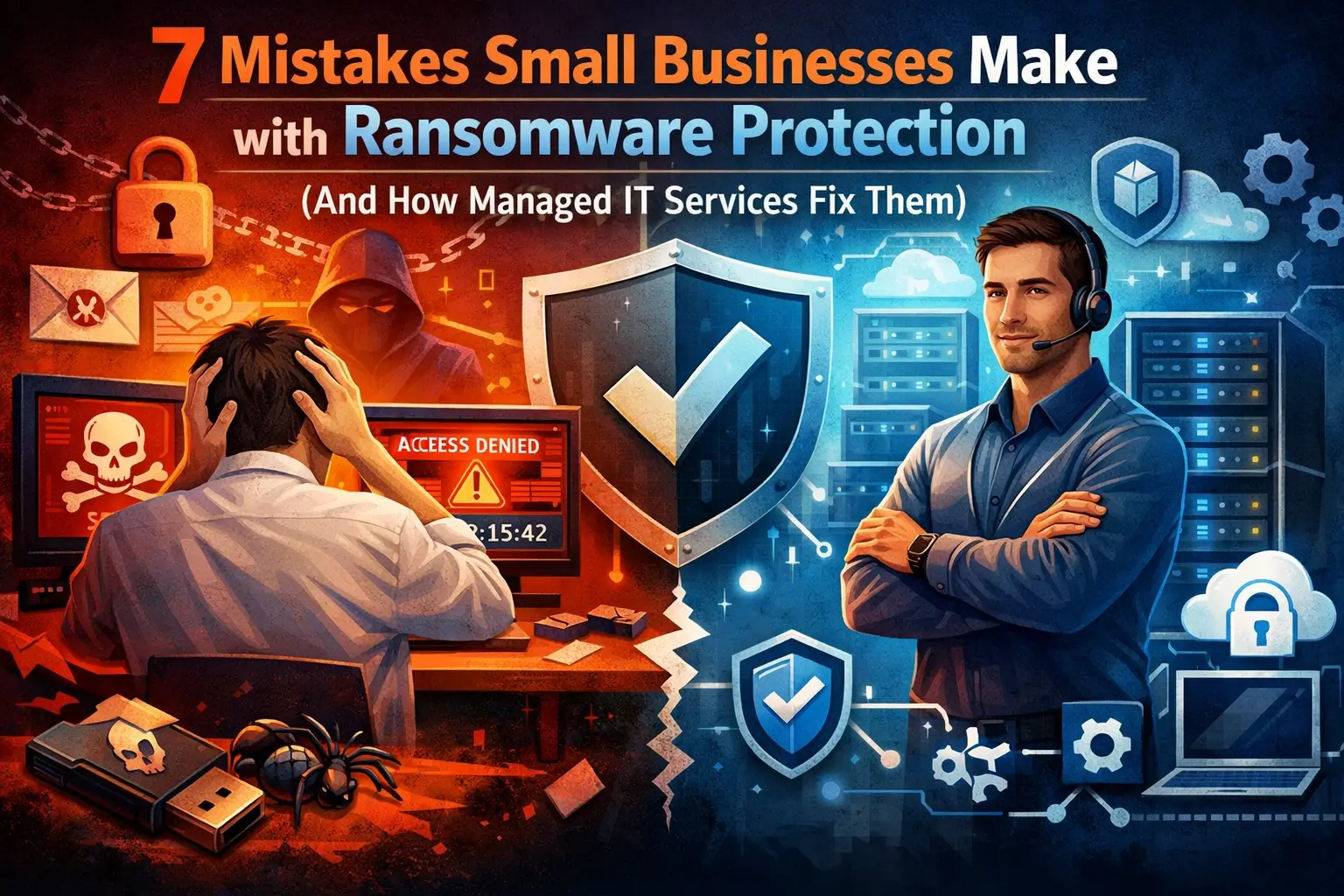
Ransomware attacks aren't just a problem for Fortune 500 companies anymore. Small businesses are now the primary target, and for good reason. Cybercriminals know that smaller organizations often lack dedicated IT security staff, run on tight budgets, and make critical mistakes that leave their data wide open.
The bad news? One successful ransomware attack can shut down your operations for days, cost tens of thousands of dollars in recovery expenses, and destroy years of customer trust.
Mistake #1: Running Outdated Software and Ignoring Security Patches
Small businesses often delay patches because they're worried about downtime, compatibility issues, or simply don't have IT staff dedicated to monitoring updates. But every day you wait is another day your systems are exposed to known exploits.
Mistake #2: Using Weak Passwords (Yes, Still)
Weak passwords are ransomware's front door. Once hackers gain access to one email account through a stolen or guessed password, they can move laterally through your network, access sensitive files, and deploy ransomware across your entire organization.
Mistake #3: Not Having Tested, Offline Backups
Having backups isn't enough. You need regular, tested, offline backups that ransomware can't reach. And you need to actually verify those backups work before disaster strikes.
Mistake #4: Skipping Regular Employee Security Training
Your firewall might be bulletproof, but if someone clicks a phishing link and enters their credentials, none of that matters. Human error remains the number one entry point for ransomware attacks.
A single annual "cybersecurity training" session doesn't cut it anymore. Phishing tactics evolve constantly, and employees need regular reinforcement to spot increasingly sophisticated social engineering attempts.

Mistake #5: Relying on Basic Antivirus Software Alone
That antivirus software you installed three years ago? It's probably not enough anymore. Modern work environments include laptops, phones, tablets, home office setups, and cloud applications: each one a potential entry point for ransomware.
Traditional antivirus programs check for known malware signatures, but today's ransomware variants morph constantly to evade detection. You need endpoint detection and response (EDR) solutions that identify suspicious behavior, not just known threats.
Mistake #6: Thinking "We're Too Small to Be Targeted"
This might be the most dangerous misconception of all. Small businesses often assume hackers only go after big corporations with millions to lose. The reality? Cybercriminals prefer smaller targets precisely because you have fewer defenses.
Ransomware gangs use automated tools to scan thousands of businesses simultaneously, looking for easy targets. They don't care about your company size: they care about whether your systems are vulnerable. And with the rise of "ransomware-as-a-service," even low-skill criminals can launch sophisticated attacks.
The ransomware landscape has evolved beyond simple file encryption too. Now attackers use double extortion tactics: they steal your data first, then threaten to publish it publicly if you don't pay: even if you restore from backups.
Mistake #7: Not Monitoring Your Network
If ransomware gets into your network, how long until you notice? For many small businesses, the answer is "when files won't open anymore": by which point the damage is done.
Relying on a single security tool creates blind spots. Defense-in-depth strategies include firewalls, intrusion detection systems, network segmentation, and continuous monitoring. Without these layers, suspicious activity spreads undetected until a full-blown infection forces your hand.